Showing posts with label real world. Show all posts

Monday, April 21, 2014

Across the Pacific: From Tropics to Snow


I was reading Meg Crane's zine when I saw her ad calling for submissions for her zine's April/May 2014 issue. The topic was about travelling and journeys. It was something I could completely relate to, and it was something that I wanted to share to everyone. And because I would rather write my story than talk about it, I signed up to write it.

I had a difficult time writing it because I cried a few times when I was writing it. When I'm writing, I usually write a few sentences then read them again. So every time I reread them or if the idea really resonated to me, I tear up. Even after reading it for this post, I teared up a little bit.

Here's a short excerpt (or parts where I always get emotional):
When you're a minority, it feels completely different. It changes your world and your view about the world. 
You feel like you don't belong. You feel like they're giving you disgusted looks. You feel like they're judging you. You feel like they're being condescending. You feel like they're not treating you right just because you're different. Your self-esteem goes all the way down until you lose the self-confidence you've built your entire life. 
It's hard. It's really hard. But everything will be alright. 
You will only fully understand how it feels to be discriminated when you have been discriminated.
This is one of my favourite parts:
I've accepted that I will never become white. I have learned to embrace my identity. It took me six years to figure this out and I think I'm still in that journey. The journey of finding and accepting myself. 
Before coming here, I thought it was going to be easy and simple. All I had to do was get my education and get a job to help myself and my parents. I was 19 then. I was young. I was naive. I have learned so much in the past six years that sometimes I find it hard to believe that I have survived in Canada this long 
It takes courage to leave your past and start a new life.
My story doesn't end here. There's a reason why I moved here, so I have to know what that is.

Life is full of ups and downs. There are times when you're at the top, and there are times when you're at the bottom. There's nothing wrong with starting over. Leaving your past and learning from your mistakes make you a better and stronger person. So whatever it is that you're going through now, don't give up. Don't lose hope.
-----
Grab a copy of Cockroach zine's April/May 2014 issue to know more about my story and to read other people's stories about their own journeys. Email them at cockroachzine@gmail.com, follow them on Twitter @cockroachzine, or like them on Facebook. You can also grab a copy on Etsy or at Winnipeg Makers & Market.

Thursday, February 28, 2013

A Thousand Farewells

Our Journalism class was assigned to read Nahlah Ayed's A Thousand Farewells for an assignment. 


She's very knowledgeable of the Arab language and culture. Her parents decided to move back to Amman, Jordan because they wanted their children to understand the culture and language. At six years old, she had to learn a new culture.

These two paragraphs stood out for me the most:


If there's one thing that journalists could learn from this book, it was the second paragraph. People are always the story. They're not quotes. It's a good reminder for aspiring and professional journalists that people are human too. Humans who should be treated as humans. They are people who has a history and culture. 

In the first paragraph above Ayed mentioned understanding a country's history to understand the transpired events. In the second paragraph she talked of speaking the same language. And she's right. It's not just the language. It's understanding the cultures and backgrounds of different people that can transcend language. When you're familiar with a culture, you can understand that person's world views. Even better when you lived in that culture.

I eventually liked it as I continued reading. But the first two chapters didn't work for me. I didn't like how she introduced her relatives. It would've been better if she quoted her parents or grandparents so that readers can feel or sympathize with them. They seemed distant to me because Nahlah was telling the story of her family. It took me three chapters (almost two) to invest in the book. When she returned to the Middle East, that's when the book became exciting. 

I loved the quotes from the people she interviewed because these people seemed alive.


These quotes were exactly what Ayed meant. In order for one to understand the Arab Spring, one must understand the people behind the revolution. There was a reason why they did it, and this book showed the reasons, from the Arab people themselves. 

The book showed me a new perspective of the Arab Spring and its people. When I watched or read news about the Arab Spring, I didn't connect with the news because it was far away from my comfortable home here in Canada. But after reading the book, I understood them. 

I saw a new perspective of the Columbine High School Massacre after I watched Michael Moore's documentary film "Bowling for Columbine" in 2008. I didn't know too much about the massacre because I was in the Philippines in 1999. I was 11, I was young, and I was ignorant of the world. The film made me aware of the world and the things I could learn. Moore didn't just show Eric Harris and Dylan Klebold's stories; he connected the shooting into a larger, social context. A context that's still an ongoing issue in U.S.A. today. Of course, Moore was biased, but as a documentary film, it worked. I learned more from it after watching it.

Just like reading the book. I learned more from it after reading it. So for anyone who's interested in finding more about the Arab Spring, this book is for you. 

Friday, November 25, 2011

Black Friday craze

  This is the first post that I'll write about this annual event in the U.S. Black Friday, as some of you are aware of, is an annual event that happens the day after the U.S. Thanksgiving day, which is every fourth Thursday of November. I have never been to the U.S. yet, so I haven't really witnessed or have been a part of the Black Friday trend where stores offer their lowest, doorcrasher prices that may or may not give Boxing day a run for its money. Actually, products are lower down south than here in the north, and that includes cars, which this Globe and Mail article by Joanne Will attests to. Granted, this article was written months ago, but that still does not change the fact that most products are cheaper in the U.S. than here in Canada. Anyway, that's another territory that I don't want to dive into today.

  What I find most fascinating about Black Friday is that Americans line up or even camp out Thursday midnight just to be the first in line to snag that iPad or any "hot" gadget when it's not really necessary. Okay, I understand that maybe some people do need to shop for Christmas gifts. I completely understand that. But what about those who just camp out on Thursday night or line up early on Friday morning just to grab that product that they "need"? It's just, I don't understand the need for buying or spending hundreds or thousands of dollars (like for an iPad, for instance, or a 60-inch LED HD 3D flat screen television) because it's Black Friday. Because everything is so cheap. And this is a once-a-year event. But do we really need them? I admit that I have succumbed to this corporate North American lifestyle after living here for a while but sometimes, when I go to Anti-Pinoy or Facebook and check this tour guide's profile (Carlos Celdran) where he posts pictures about the impoverished and the poorest of the poor communities in Manila, Philippines, I can't help but be guilty about going shopping or buying a hot chocolate from a local cafe. It's unbelievable how I get to live here in Canada and complain about the cold weather when these children in Ulingan, Manila are living in waste and garbage. It's completely unimaginable. It's horrifying. But I guess that's what makes North America first world nations and the Philippines a third world nation.

  I grabbed these photos from Carlos Celdran's Facebook, which he grabbed from Sidney Snoeck, the owner of these photos. 


  Please visit this website after seeing these pictures: Project Pearls. 

Wednesday, October 19, 2011

Slow Down, Please

  Quite a late reaction considering that the event took place on Sunday, October 16th, and the report was released Monday the next day. However, when my instructor mentioned this bit (and I am ashamed that I have not read the news that day), I checked the online newspaper to see what the laughs were all about—and the photo delivered (but trust me, I wasn't the only one who didn't read the paper). 
  
  With all the Occupy protests happening around the globe and the eurozone crisis, you would think that those should be the news of the week. But what can I do. I'm swamped with school work and work, and add to that my social life that I try to relive once a week to bring me back to reality. And my stress reliever to take me to the fourth dimension to keep me sane. 
  
  I'll make this short and sweet because it's late and I have a class tomorrow (not a surprise really). 
  
  On Sunday, October 16th, drivers were shocked to see this sign as they were driving on the road:


  Do you think the drivers slowed down when they saw this sign? Of course. I mean, who wouldn't? This made my day yesterday so this should have made it for the drivers who saw this too. 
  
  I apologize again for the quick and short post. I'll do better next time, just, not now. 
   
  The full article is right here if you are interested in the details. 


(photo by Karen Chapman for The Winnipeg Free Press)

Monday, August 22, 2011

You will be remembered, Jack

  I am not fully immersed in the Canadian politics because I have always thought that politics is boring and dirty with its history of mudslinging and violence that I  have encountered during my nineteen years of living in the Philippines. However, when I realized that I have to be politically aware and knowledgeable for the sake of my new home country, I began to learn new persons and catch The National on CBC every night to update myself on the daily news. Since I began university, I became even more politically knowledgeable not for the sake of Canada, but for myself to be a better Canadian immigrant. And of course, that meant that I followed the May elections held this year.

  It's no wonder that I was shocked to read a Facebook status that talks about Jack Layton's death. I thought was pulling everyone's leg, but then I knew that he would never do that. So I got out of Facebook and checked CBC News to confirm this news. And there it was. His death of cancer at 4:45am. I was shocked and saddened by his death, for I never expected this, because I believed him when he said that he'll be back in Parliament in September when he took a personal leave last month due to his health. I don't have any political bias but while I was watching the news and skimming articles I was glad to see that Jack's death united Canadians despite their political differences. I haven't known him for a long time, but I feel that he might have done more if he didn't pass away. I am sure and confident that he will be remembered by all Canadians. My deepest condolences to his family and friends. 

  Here is Jack Layton's last letter to the Canadian written on Saturday, August 20th. The entire letter can be accessed at the CBC website or from the NDP's website, but I would like to quote an excerpt. And don't forget to grab a tissue when you're done reading his letter. 
"My friends, love is better than anger. Hope is better than fear. Optimism is better than despair. So let us be loving, hopeful and optimistic. And we'll change the world."

Rest in Peace, Jack
photo from the CBC news photo gallery

Saturday, April 2, 2011

Will there ever be an epiphany?

So I had some free time to write this post, and I am open to any downtime considering what the past few weeks have been for me. I've just finished watching a BBC documentary about an English bus driver who went to Manila, Philippines, and experienced the life of a jeepney driver. I am grateful to BBC for doing this documentary, so at least the Philippine government can do something about it: to make them realize what life is like in that country from a foreigner's perspective. 

I found the video in youtube, and it took me a few minutes to find the link so I apologize but I can't provide the link in case BBC closes it down, and I might not be able to watch it again. Nor the other people who can watch it. I could send an email if you're interested, but really, youtube's search bar is pretty easy to navigate and you would find the link easily. The video is accessible in the BBC website though; so you can visit there to view it. However, it's not available in all areas so one may not be able to watch it depending on which country they live. 

The documentary is an hour long; an average time for a one-episode Korean drama but longer by 10 minutes for a Japanese dorama. Josh West is a bus driver in London and he embarked on a 10-day journey in the Philippines to live the life of a jeepney driver in Manila, Philippines. He stayed for a while with Rogelio Castro, a jeepney driver and his family in San Andres Bukid, Manila, Philippines. Josh drove the jeepney by himself on his last day to get a taste of what it is to be a driver in the bustling and overpopulated streets of Manila. 

As I was watching the documentary, shame and embarrassment were playing in mind, thinking how a foreigner would see this from their perspective. And it's true; I should be ashamed that I used to live in that city more than three years ago and things are still the same. There is still a clear disparity between the rich and the poor, with the poor people living day by day, just like Rogelio. On a typical Monday morning, Rogelio wakes up, drives in Manila for 12 hours, goes home, eats. The next day, he does the same thing. But he doesn't think about what's going to happen the next Monday. All he thinks about is hoping that he makes enough for the day to pay for the debt that he used to buy the jeepney and give the money to his wife, Edith, and she manages the budget for the eight people living in their home. At least Rogelio and Edith only have three children, because Edith did not want her children to die of hunger. Their grandchildren lives with them as well. But they had a neighbour, Elsie, and she lives in a smaller place with her husband and her thirteen children. Thirteen children. Can you imagine that? And now Elsie just realized that she needed to learn more about Family Planning because she was just experiencing the hardships of having a large family. Which she should've done before so she didn''t have to suffer the consequences now. Here's what I like on what Josh said, when they were about to go to the hospital and saying how Elsie should have gone to the hospital a long time ago but then he said, "I'm not living their life, they are." I don't know if this sounds mean to some people, but I find that he's just being realistic that Elsie and her husband decided to have thirteen children, so they have to suffer that. I know, I know. Their children would suffer greatly because they were only born and they're defenseless. But they should also blame their parents and the government for not implementing a bill like the hot issue of the Reproductive Health Bill (or RH Bill) that is opposed by the Catholic Church (who else?). It annoys me that Elsie's family are going through this because the government didn't have Family Planning programs in the slum areas, but I couldn't help but blame Elsie and her husband as well, for they should have known better. I mean, they already know they're poor, so why produce thirteen children, and not be able to feed them? Why? And her first pregnancy was when she was 14 years old. How about that. It's just annoying, really. And disappointing. That the government still remains paralysed even after twenty-five fricken' years of the democracy the Filipinos fought for. 

Alright, here are some pictures, and I apologize if they're blurry. 


the jeepney

Rogelio's jeepney

Rogelio's neighbourhood

Manila

the crazy streets of Manila

a typical day in Manila

Josh and Rogelio, the latter pondering on the distinct separation of the rich and the poor

Josh workin' it

Josh did it! (love their smiles here)

To describe that country, it's like a deteriorating and paralysed place that is also moving backwards. And I am really, really glad, that BBC did this documentary to show the world how ugly the system is.

And don't even get me started on the pagpag. 


A/N: I wrote this in a hurry, and I don't plan on editing it, so I'm sure there are lots of grammatical mistakes, but I don't really care. 

Thursday, March 31, 2011

Do the right thing

University has kept me on my toes these days, especially the paper deadlines that I am now used to. Finals are coming up though, so I'll be gone again for a while but I'll try to update this blog every month as much as I can. I still have some pending posts regarding some anime and Japanese films and once I have the time to actually write them, not just jot them, I'll post them up here too. 

Anyway, this would be a really random post; an assortment of ideas that have been running on my head so I just thought I'd share with you. 

By now most of us in the globe are aware of the the Arabic revolutions and disasters striking in the Eastern and South Eastern Pacific. If you have not heard about it at all nor aware of it, then I will ask you: what are you doing on the internet? It's thanks to this technology that people from the Islamic countries are able to post videos or tweets a millisecond faster than a CNN correspondent, transcending time and space. It's a wonder what globalisation has brought to this era. 

Now, for these events, we do not want them to happen. We do not wish for them to happen. But what can we do? Prayers help, that is true, but aside from prayers, if you have anything that you can do, help. Donate. Volunteer. The Red Cross is a wonderful international organization and I'm sure your donation would be a great help and it would go farther than what you expected. And besides, if you're able to buy a small double-double, you can afford to donate something right? And it's not just Red Cross where you can donate to. There are hundreds of groups and medium for you to give. So if you have something you want to give, please do. Someone needs it more than you do.

Now back to the Philippines. I thank my parents because we don't have any Filipino channel at home because we're just not interested. I may have offended a fellow one but that's our choice. My parents are not exactly tech-savvy either, so they can't just turn on the computer to read some news back home. What connects them to the country though, are the local Filipino newspapers circulated for free in the city. And a conversation my dad overhears or is a part of. The thing is, because we don't have these channels on our tv, I am also not aware of every news that are happening in the country. I believe it does have its consequences to me, because I am beginning to break the connection that I have for it. There is still an association, but only because of the memories in that country, but not the government. I do love the Philippines, but only the country as a geographical and tropical country with its lush and unique environment and wildlife that the government should be active in preserving it. Okay I'm digressing too much. 

Here are some pictures Joey Mendoza designed himself, and I'd like to share with my fellow Filipinos and you can post them on your Facebook wall. I got these from Carlos Celdran and I thought about sharing them as well.


Like I told you, this post is scattered, like I just threw them all together to one brew, but if you think about it, it makes sense too (oh hey, they rhyme). 

Wednesday, October 27, 2010

don't forget to cite!

This has been an interesting day for me for no reason at all, and because of that, I'll be posting two news articles that has no relation to each other whatsoever. The first one might be sad to hear about this news especially those people who have made this technology a part of their memories. Here is the article, and I suggest you to check the link of the original article as well for citation purposes:
Sony Walkman bows out to the iPod after 31 years 
JAKE COYLE AP Entertainment Writer
10/26/2010 | 02:40 PM

NEW YORK (AP) — The Walkman, the Sony cassette device that forever changed music listening before becoming outdated by digital MP3 players and iPods, has died. It was 31 years old.

Sony announced Monday that it has ceased production of the classic, cassette tape Walkman in Japan, effectively sounding the death knell of the once iconic, now obsolete device.

The Walkman is survived by the Discman (still clinging to life) and ironic music listeners who think using a Walkman in this day-and-age is charmingly out-of-touch.

It will continue to be produced in China and distributed in the U.S., Europe and some Asian countries. Digital Walkmans are also being made with models that display lyrics and have improved digital noise-canceling technology.

Still, if you're looking to chisel a date in the Walkman's tombstone, then Oct. 25, 2010, is as good as any. For many, that it's taken this long is surprising: "They were still making those?" Perhaps Oct. 23, 2001, the day the iPod was launched, is the better date of expiration.

But none of the success of Apple's portable music players would have ever happened without the cassette Walkman. Some 220 million have been sold since the first model, the TPS-L2, debuted in July 1979. (It retailed for $200.) At the time, transistor radios were portable, but there was nothing widely available like the Walkman.

It was developed under the stewardship of Sony founders Akio Morita and Masaru Ibuka. Morita insisted the device not be focused on recording but playback, a relatively odd notion at the time.

Originally called the "Soundabout" in the U.S., the Walkman was an immediate sensation and a revolution in music listening.

Foremost, it was portable. Music no longer needed to be something that one experienced sitting in a room, but could be blasted on the bus, pumped while jogging on a beach or played softly while studying.

By turning the volume up, anyone could be tuned out.

The detached teenager with foam earphones slouched in the back seat or bobbing his head in the elevator became an indelible image of the '80s. (The first Walkman did have an orange "hot line" button to lower the music and increase the microphone so you could hear someone talking to you.)

Music, previously listened to in a room with shag carpeting and a stereo, was cast into the world, made a part of daily life. Pink Floyd could join a walk in the park, Public Enemy could soundtrack a commute.

More than portability, it fostered a personalization to music, a theme the iPod would also highlight in those early dancing silhouette ads. A big reason there's so much nostalgia for the Walkman today is because it eliminated any separation from music. It felt like an appendage, which is perhaps why some (with questionable fashion instincts) clipped theirs to their belt.

The Walkman was also the father of the mixtape, an offspring that nearly trumps the progenitor. For the first time, music was something you could make yours by arranging it and swapping it.

For those young and unfamiliar with this process, making a mixtape typically entailed gathering songs by the Cure and Depeche Mode, labeling the tape with care and awkwardly giving it to a love interest.

The Walkman didn't disappear so much as it was improved upon. Sony continues to use it as a brand, but the company long ago ceded hipness and style to Apple. The iPod will likely one day befall a similar fate, and another generation will gasp in joined wistfulness.

When it comes to music and how we hear it, we're all romantics. -AP

It's sad, really, if you think about it; that the once famous and innovative technology has now become obsolete. The scary fact is, it only took 31 years. It may seem like a long time for an average human being, but if you think about it, it's not really that long, for it's not even less than half a century, which means that a lot can happen in 30 years, and there is still more to happen in the next 30. It didn't take 30 years for another World War to take place. It took Korea about 50 years to recover from the war to be the most technologically-advanced countries in the world today. It took more than 30 years for Copernicus to prove that the Earth is the centre of the universe after Aristarchus discovered it a few years after Aristotle's time. So really, I wouldn't be surprised when a new technology rises after Apple's takeover for we never know what will happen, say, after 3 years, knowing what the modern world can do.

Now here's the second article I wanted to share with everyone too, and I find it embarrassing and funny to be real. I feel like this post is still pulling my leg everytime I read it. Please visit the original site of where I got this from too. 
License to plagiarize
First Posted 10:35:00 10/21/2010
CALIFORNIA, United States—Thanks to the Philippine Supreme Court of Midnight Chief Justice Renato Corona, Filipinos now enjoy a "right" unlike any bestowed anywhere else in the world.
Filipinos are now free to copy the words and thoughts of other authors without attribution and without fear of being charged with plagiarism unless the accuser can prove “malicious intent.”

This new “right” was promulgated by the Supreme Court on October 15, 2010 in the Matter of the Charges of Plagiarism against Associate Justice Mariano C. Del Castillo where the court majority voted to absolve their colleague of plagiarism charges for including in his ruling entire paragraphs lifted directly from foreign sources without attribution.

The charges of plagiarism arose when Del Castillo wrote the majority decision in the case of Vinuya et al vs. Executive Secretary, issued on April 28, 2010, where he denied the petition of the Philippine comfort women for a writ of mandate to compel the Philippine government to ask Tokyo to provide compensation to those who were victims of sexual slavery by Japanese occupation forces during World War II.

After reviewing Del Castillo's ruling, the lawyers of the comfort women discovered that "Ponente" (decision author) Del Castillo had lifted entire paragraphs of his decision from three sources: “A Fiduciary of Theory of Jus Cogens" by Evan Criddle and Evan Fox-Descent, "Breaking the Silence on Rape as an International Crime" by Mark Ellis, and "Enforcing Erga Omnes Obligations in International Law" by Christian Tams.

While using those foreign sources, Del Castillo drew the opposite conclusion and ruled that sexual slavery during WW II was not a “Jus Cogens,” a "higher law," like prohibiting genocide or the slave trade, which may not be violated by any country.

Perhaps it was precisely this contraposition that explains why Del Castillo chose not to cite the foreign sources.

In its October 15, 2010 decision, the Court dismissed “for lack of merit… the charges of plagiarism, twisting of cited materials and gross neglect against [Del Castillo]" because the Court found that their colleague did not have “malicious intent” when he copied the passages from foreign sources

The Court accepted Del Castillo’s feeble excuse that his legal researcher had inadvertently dropped off two citations in the footnotes. Two may be a little understandable but Del Castillo blatantly lifted 22 distinct passages from the foreign sources without attribution.

The Justices also accepted Del Castillo’s lame argument that his computer was not equipped with a software program that would warn him that he was plagiarizing. (Students, take note of this creative “it’s Microsoft’s fault” excuse).

In her separate dissenting opinion, joined by Justice Conchita Carpio-Morales, Associate Justice Lourdes Sereno (the lone Aquino appointee on the Court) declared that Del Castillo had indeed committed plagiarism in drafting and passing the decision in the Vinuya case. “The majority decision will thus stand against the overwhelming conventions on what constitutes plagiarism. In doing so, the decision has created unimaginable problems for Philippine academia, which will from now on have to find a disciplinary response to plagiarism committed by students and researchers on the justification of the majority decision.”

Justice Sereno further added: “It has also undermined the protection of copyrighted work by making available to plagiarists ‘lack of malicious intent’ as a defense to a charge of violation of copy or economic rights of the copyright owner committed through lack of attribution.”

Justice Sereno expressed her regret that the effect of the majority decision was to render Philippine intellectual property laws virtually “meaningless."

The faculty of the University of the Philippines College of Law immediately expressed its outrage at the majority decision of the Court. “In common parlance, ‘plagiarism’ is the appropriation and misrepresentation of another person’s work as one’s own," the faculty statement read. "In the field of writing, it is cheating at best, and stealing at worst. It constitutes a taking of someone else’s ideas and expressions, including all the effort and creativity that went into committing such ideas and expressions into writing, and then making it appear that such ideas and expressions were originally created by the taker. It is dishonesty, pure and simple."

"A judicial system that allows plagiarism in any form is one that allows dishonesty. Since all judicial decisions form part of the law of the land, to allow plagiarism in the Supreme Court is to allow the production of laws by dishonest means. Evidently, this is a complete perversion and falsification of the ends of justice.”

In response to this denunciation, the Supreme Court threatened to cite the UP Faculty for contempt for making a “sub judice” comment as Philippine lawyers are prohibited from commenting on active cases before the court.

As I am not a Philippine-licensed attorney, the Philippine Supreme Court cannot cite me for contempt so I can freely declare what my “companeros” in the Philippines may not dare say. The majority members of this Court, all GMA appointees, are contemptible for making “a complete perversion and falsification of the ends of justice.”

There you go. Can't say I'm proud of it, because I think that this is a failure in the Philippine judicial system. Pardon me for not giving my reasons on why I posted these two articles, for sleep deprivation has been getting to me for the past couple of days. For now, this is the best that I can do.

However, this is just a reminder particularly for post-secondary students to not forget their citations and references when they do an academic paper either in MLA or APA style format. This is what I've been learning in one of my courses, and it's useful information especially for aspiring book or magazine editors. And I admit that this post does not show how I should have used the two articles for references, and I apologize for that as well. But at least you got these two articles to chew on.

Sunday, April 18, 2010

Let us not forget...

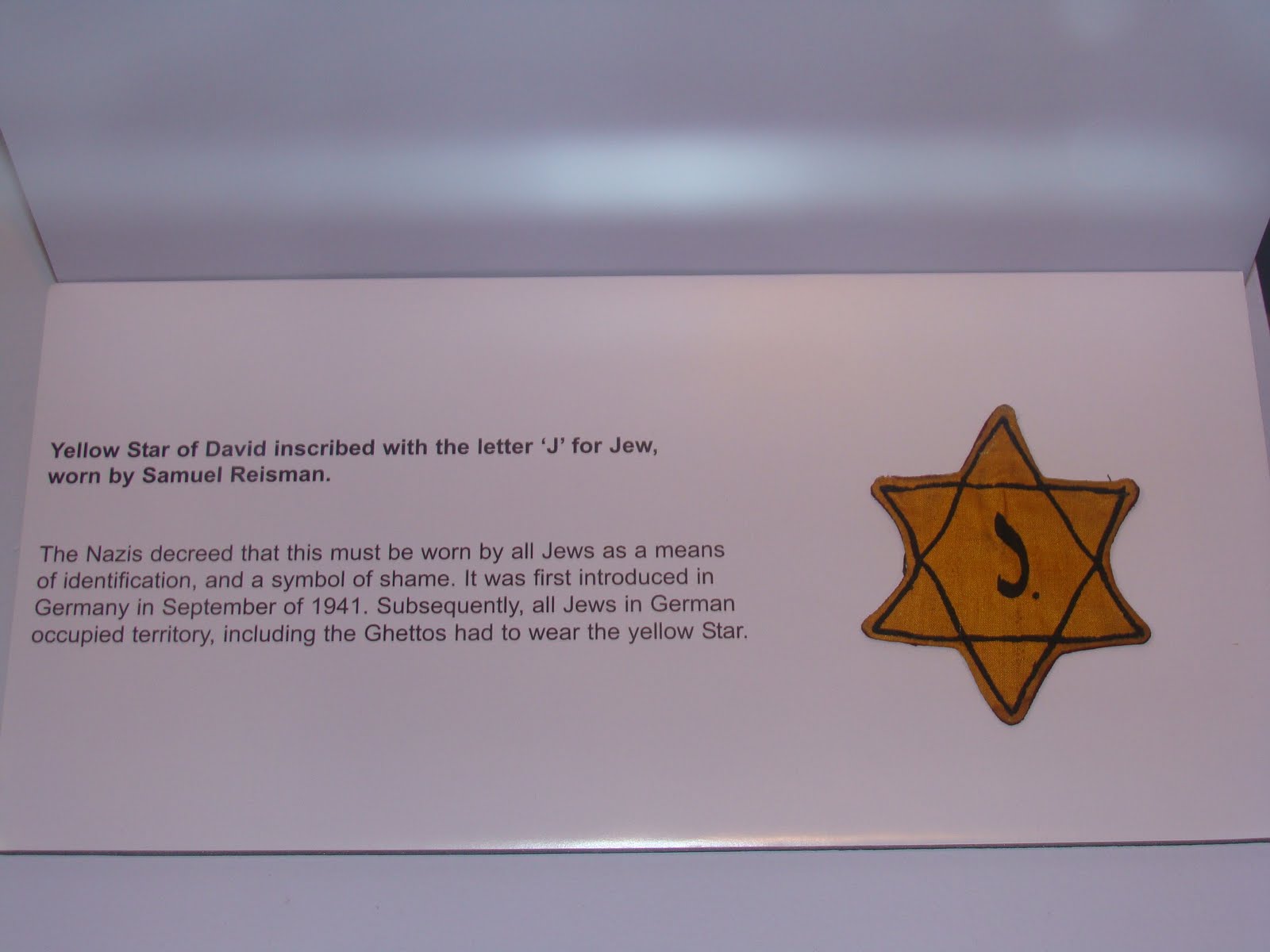
I almost forgot that I had these pictures. In December of last year our class had a field trip for our English class at Asper Centre, the Jewish Centre of Western Canada Inc. and met a Holocaust survivor where he talked about his experience in the camps. I regret that I didn't take his picture; it would've been nice for everyone to see.

Here are some of the pictures that I took from the museum; it's not a lot because it's not that huge really. 


Which reminds me, April 12th was the Holocaust Remembrance Day, so posting them made some sense too, for us to commemorate and remember them.

Wednesday, December 30, 2009

His Last Farewell

It was around 7 in the morning of December 30, 1896 at Bagumbayan, Manila when a Filipino named Jose Rizal died under the hands (or in this case, guns) of the Spanish soldiers. A death that opened the eyes of the Filipinos that rose to the Philippine Revolution which made the Spaniards flee the country of our mothers.


I decided to write this to commemorate the Philippines' National Hero, Dr. Jose P. Rizal, for today is his death anniversary (I'm on the other side of the world, so technically I'm 14 hours behind, and right now, as I publish this post, it's midnight over there, the 31st of December. A day late but early for the first day of the coming year. But whatever. At least I remembered him. And also, I get to remind myself of his heroic acts and his inspiring works.). He was considered our National Hero through his unselfish heroic acts and pacifist ways of approaching the enemy. Publishing his works which were mostly poems, he was able to reach out to his fellowmen which motivated them to fight for their freedom. And he's a damn good writer, I must say, for I've read some of them (not in Spanish, in Tagalog, but all his works are in Spanish), and he's pretty smart for someone who graduated at an early age.

But most probably his best works are his two novels, Noli Me Tangere (Touch Me Not/ Huwag Mo Kong Salangin) and El Filibusterismo (The Reign of Greed/ Ang Pilibustero), which instigated the Katipunan (an association of anti-Spanish Filipino revolutionists) to attack the Spaniards. He had other literary works as well, poems and sayings that he wrote since he was a kid, which all speaks nationalism and patriotism. I have read both novels for we studied them in junior and senior year in high school (a curriculum requirement), and I think that Noli (here's a good background) is better than El Fili for the latter is too dark for Rizal's taste, unlike Noli which has hints of romance.

You can also watch the movie Jose Rizal (highly recommended, I must say) that was released in 1998 if you really want to know more about his history. Either you can buy it or watch it online, but if you did like it (and I really hope you would), you can just buy it for it really is worth every penny.

Alright, I'm not showing this to the world to let them know how Spain conquered and molested my country for 333 years. It was the past, a part of history, and I completely understand that. Heck, I don't think Filipinos still have these repressed feelings against all the conquerors of our Motherland. There's no bitterness anymore, just the sheer pride that we have for our forefathers who protected us and the archipelago that stands today. I know that there are also some ordinary and unrecognized Filipinos who serve the country in their own ways that would surely make Rizal proud. Sacrificing their blood, tears, and sweat, just for the sake of their homeland. Wonderful, isn't it? Well, I just hope that some of our leaders would get the hint.


A/N: These are facts, I tell you. A part of the Philippine history. I'm just not sure (more like accurate) on some of the information. For example, I'm not really sure (okay, I forgot) if it was because of El Fili and Noli that started the Katipunan. It might have been before that. These Filipinos were violent and have a thirst for blood. Nah, just kidding. I respect them a lot, just so you know. It's just that my brain's a bit rusty; I haven't studied Philippine history for years (not that long though, at least I remember some things). 

Also, the title post is inspired from his last poem, Mi Ultimo Adios (My Last Farewell), his last literary piece written the night before he was killed.

Tuesday, December 8, 2009

When it's at 'Night'

No matter how many times I read or watch something about it, I still can't help but not believe it. I know it's real; I believe it was a part of history. Good thing that there is proof that it really did happen, a memoir from one of the survivors of World War II.


Night by Elie Wiesel is a very, very good memoir of what happened during the years of the second world war and during the Holocaust. It's actually short, with 9 chapters, but packed with all the emotions and oppressions that you can't even imagine.

Here is a monologue in chapter 3 that I find really unforgettable, which I think is one of the main highlights of the book, although there are a lot of events that I want to elaborate, but I can't. So on this monologue are the feelings and the realizations he had the night that they arrived at Auschwitz.

Never shall I forget that night, the first night in camp, that turned my life into one long night seven times sealed.
Never shall I forget that smoke. 
Never shall I forget the small faces of the children whose bodies I saw transformed into smoke under a silent sky. 
Never shall I forget those flames that consumed my faith forever.
Never shall I forget the nocturnal silence that deprived me for all eternity of the desire to live. 
Never shall I forget those moments that murdered my God and my soul and turned my dreams to ashes. 
Never shall I forget those things, even were I condemned to live as long as God Himself. 
Never.

Reading the book has made me change my perception on what really happened that time, for I only know the basic facts. But here, you can actually feel the emotions of what happened that time―the hunger, pain, guilt, hatred, vengeance, justice, fear, selfishness, and most especially, questioning your faith in God. And the author was able to address the issue very well; and I'm sure that those who are devout or from observant families would understand this.

Seeing this from the victim's point of view has made me think of this tragic event in history and understood a bit of what they had to go through during the war. My ancestors and fellowmen were also victims of the war for the Japanese conquered the Philippines as well despite of the Americans in the country. They too, experienced the horrors of the war, and I will not compare this to the Jews for this is not something to be proud of or make a competition out of. Everyone had suffered at one point or another; for this was a war that went on in the entire world, where some nations were still rebuilding due to the first but then started again with another one. And in respect to all the victims and survivors of the war, acknowledging and empathizing with them would be better for we certainly do not want to experience what they went through during those times. It was horrible, definitely, but like Wiesel said, ''there really is no other words to describe the horrors of those events.''. It's not worth remembering them, but at least through him and all the other survivors we are able to understand and know what truly happened that time. And through them, the world may be able to avoid this terrible ordeal again.

I would love to put in more quotes from the book, but I don't really want to spoil you if you haven't read it. If you have though, that's great, for this deserved the Nobel Prize and it is worth your time. I would also like to share this site that my teacher told me, and it's interesting to look at, especially if you are into The Holocaust and you want to look deeper and know more facts. This is the site, and I hope that you do explore it; so have a look around and it's best if you know more about the second world war in Europe (particularly The Holocaust) in order to fully understand it. And there is also an episode in Oprah where she and Elie went back to Auschwitz to relive everything, but you have to see it for a cost.

In the meantime, I hope you do get to read this wonderful memoir; or if you're not into reading, you can watch some videos of Elie Wiesel in some sites (there is one recent video where Wiesel made a speech at Buchenwald with President Obama on his side in memory of Elie's father) around the net.  

Friday, November 27, 2009

because of politics, this happens again.

And when I thought that this month is a time for celebrations, this tragedy happens. The nation was filled with joy and bursting with Filipino pride when Pacquiao won against Cotto (bless him, he was a good fighter) and won his 7th title on Nov. 14th. This hero was once again commemorated not just in the country, but internationally as well. But, there is also another hero who won as the CNN Hero of the Year, and it is none other than Efren Peñaflorida.

The Maguindanao Massacre happened 23rd of November, Monday, with 59 victims, most of which are women and journalists. A tragic and stunning event, and the only reason why these people were killed is because of politics. Again. I was reading some news about it on a national broadcasting network in the Philippines when I came across this statement from the said company, and I wanted to share it with you. (biasedness on the network aside, for there has been some network war going on in the country, for those who don't know. it's just that I was already at their website and browsing some videos and articles.)

The statement of GMA Network as read by Jessica Soho in their news program Nov. 25th:

Walang kahalintulad sa ating kasaysayan ang karahasan sa pulitikang naganap nitong araw ng lunes sa Shariff Aguak, Maguindanao. Ang mga biktima - mga babaeng Mangudadatu na magsusumite ng certificate of candidacy, mga abogadong magbibigay ng payo at mga taga-media na dapat ay magiging saksi at magbabalita.

Lahat sila'y may ginagampanang papel sa demokrasya, pero sa lugar na kailan lamang ay tinawag na Ampatuan, dahas ang kanilang dinanas, na wala nang paglulugaran sa panahong ito.

Ang kahindik-hindik na krimen ay mapait na halimbawa sa klase ng pulitika na mayroon tayo. Sa kabilang banda, nariyan ang mga mamamayan na lakas loob na naninindigan na maipatupad ang tahimik at matiwasay na pamamaraan upang makapili ng mga magiging pinuno ng bayan. Ang tunggaliang ito ng dahas at kapayapaan ay lutang na lutang kada panahon ng eleksyon. Ito ang mga kritikal na pagpipilian natin sa 2010 -- karahasan ba o' kapayapaan?

Iniutos na ng presidente ang agarang imbestigasyon at nagdeklara ng state of emergency sa mga probinsya ng Maguindanao at Sultan Kudarat, at sa Cotabato City. Anim na pulis ang sinibak sa posisyon.

Umaasa kaming umpisa pa lamang ito, ng mga aksyong magtatapos sa paghuli sa mga taong nagsagawa ng krimen, ordinaryong tao man o kinatatakutang warlord sa probinsiya.

Kung sila'y hindi pagbabayarin sa pagkakasalang ito, katumbas nito ang pagkasira ng kauna-unahang automated elections ng bansa.

Habang kami'y naghihintay ng hustisya, kami'y magluluksa. Magluluksa para sa mga naniniwala sa demokrasya subalit nabiktima ng karahasan. Magluluksa para sa mga taga-mediang namatay na naniwalang sapat na ang konstitusyon upang silang maprotektahan.

Sa kanilang paglalakbay ng walang armas sa mga lugar na walang kasiguruhan, nagtiwala ang mga biktima sa kapayapaan. Aming kinikilala ang kanilang sakripisyo, habang ang kanilang sinapit ay mapait na ala-ala para sa lahat. Ang kanilang sinapit ay maaaring naging kapalaran
din namin.

In English:

We are no longer who we were before Monday. In the annals of political violence in the Philippines, there have been no parallels to the slaughter that occurred on the lonely road to Shariff Aguak, Maguindanao on November 23.

52 unarmed civilians all, the majority of whom were media professionals, the victims were enroute to perform basic functions in a civilized democracy: the Mangudadatu women were to file certificates of candidacy; the lawyers were to provide legal advice; and the journalists were to bear witness on behalf of the public and to report on an important event without fear or favor.

All of these roles are essential for a political system where power is meant to be transferred without violence.

What met them in a town recently renamed Ampatuan was the exact opposite: a force and mentality that invoked the barbarity of more primitive times.

The crime that occurred in Ampatuan was uniquely savage, but it was also an extreme example of the violent tendency in our politics. At the other extreme are the many citizens who are bravely committed to the difficult and complex process of peacefully deciding who our leaders should be, such as those souls who perished on Monday.

It is this tension between savagery and peaceful process that has marked our electoral history. Those are the most critical choices in 2010.

Much will depend on how the government reacts in the coming days. For what is emerging is evidence that the assailants were not outside the law but part of the political machinery of local officials backed by the Arroyo administration.

The President so far has ordered a thorough investigation and declared a state of emergency in Maguindanao, Sultan Kudarat, and Cotabato City. Philippine National Police Director General Jesus Verzosa has relieved six PNP officials in Maguindanao.

We trust that this is just the beginning of a series of actions that will bring all of the perpetrators to justice, including the warlords who orchestrated this bloodbath.

If they are permitted to escape harsh punishment, it will clearly be a vote for barbarity and for the other savage armies prepared to assault our maiden automated elections.

As we wait for action, we grieve. We grieve for the believers in a democratic system who paid with their lives. We grieve for the martyred journalists who believed the Constitutional protection of their rights was enough.

By travelling without arms to perform their democratic duties in hostile territory, the 52 made their choice. We honor their example and sacrifice, as their fate continues to chill our bones. As fellow believers, we could have easily been them.

President Arroyo declared Nov. 26th as the National Day of Mourning for all the victims of the massacre, and I know that Filipinos will pray for these people, for this is really too much to happen again. I will admit; killings usually happen when elections come. These cases were unresolved, of course, but it is because of power and money that they do it. And the elections are coming; as much as I do not want to admit it, but there will be a national and provincial election in May 2010, and chaos has been going on (if I'm not mistaken) since last year. The year is almost ending, so more noise on the elections will be made. Politics really is dirty when you are in the Philippines. Literally and figuratively.  This is why I hate talking about politics. Anyway.

There is also a timeline and map of the Maguindanao Massacre from the same Network, and I suggest that you read it if you want to know more (and for my sake too). And it's not only the women, lawyers and journalists who were killed. Even passersby along the area were included in the massacre. There was this video interview of the Vice Mayor Toto Mangudadatu explaining what happened to his wife who was one of the victims. He said that when he saw his wife, he was shocked. And if I were him, I would be horrified. But most of all, hurt. I'll translate what he said on the video and I will warn you that what he said are really disturbing. This is what he said: "It really hurts. She was shot in her breasts, her genital area was slashed.... and it was also shot. Her mouth was shot, her eyes were pricked, her leg was amputated... I'm not crying because I want to show the nation that I'm strong." Because of this tragedy he decided to continue his candidacy for governor, even though he will go against his opponent, the Ampatuans, who they think are the suspects of this horrendous crime.

Earlier I was thinking if I should post this or not, but then I realized, this is a tragic moment in the country's history and even though the Philippines has been noted as the most dangerous place for journalists and media staff stated by IFJ, this still concerns my country and fellowmen. So please do bear with this post, pardon the disturbing atrocities I translated, and lastly, pray for the victims of this massacre.

Sunday, September 27, 2009

putting away our wants

Clips on youtube are being spread around. Facebook is filled with posts on this news. News reports are broadcasted all over the world.

My beloved country, the Philippines, is in need of help. To be on the other side of the country and away from home saddens me; for my fellowmen are coping with this calamity. The typhoon has hit them very badly and all the prayers and any kind of help are needed for them to survive.

An aftermath of this tragedy, the article is from one of the country's network media. (Just to let you know, the Filipino name of this typhoon is 'Ondoy', or more known as Ketsana.)

Most of my relatives are not in danger; although, I still don't know all the details. But the others, my fellow people in the different parts of the city and towns, are in jeopardy.


The damage has been done. The storm has passed. A new day begins. And I know for sure that every Filipino are joining their hands together and helping each other at this time of need. Putting away their hatred and bitterness and giving them their support. 'Bayanihan' is what this trait is called. Something that we will always be proud of.


photo taken(and not hotlinked) from i HEART a LOT.

Wednesday, September 16, 2009

princesses of disguise

So I was browsing some sites when I bumped into this one, recommended by another poster on another site that I was always visiting. It looked interesting, so I decided to give it a try. I sort of know some bits of information on Korean culture and society, so I wasn't that surprised when I read the article. But it's disappointing really, to think that people can't be themselves on this country. They can't show who they really are, afraid that they'll be ostracized by the same society that they grew up with.

But then again, I can't really say much about it because it just so happened that this country remains nationalistic and patriotic at this time, even when trades, explorers, wars and conquerors transpired years back.

So I'm going to let you read the article first posted way back in 2003 by Huso Yi.

'Life and Death in Queer Korea'


Like I said, I won't be commenting much on this article, I just wanted to share it with you, to inform you, and to let you know what's happening to them and how this controversial matter is perceived on this country. And also, this topic would bring up a lot of other issues that some may not want to touch on. So, might as well just share this and again, no preaching and persuading, as I respect each and everyone's opinion on this subject.

Friday, July 10, 2009

worth your time

So I was browsing my other blog looking around for what post to import here, and I decided to post this entry that I posted two months ago.

I was watching this drama, and even though the plot was getting a bit exciting, I decided to pause it for a bit so as to maintain the excitement that I feel as well as look through this site for new updates. (Sometimes, I marathon a drama especially if it keeps me at the edge of my seat. As for this drama though, I thought that I needed a break because this isn't your typical Kdrama, so I thought of putting it aside and not think about it for a while, so as to avoid being sucked into that world.) And so I stumbled upon this post, which got me intrigued so I decided to watch it first.
(I assure you, your 66 minutes won't be put to waste.)

Born and raised in a concentration camp

 
Shin Dong Hyuk and hosted by Adrian Hong
uploaded by googletechtalks

This video pretty much says it all. I remember watching a documentary about this group who went to N.Korea and filmed a documentary for National Geographic (or Discovery? my memory is very vague) and they were only allowed to film approved places, and they had to really keep the hidden camera very well.


PS: just to let you know, I've posted this 2 months ago in my other blog, so I've already finished the drama and it was awesome. not your typical Korean drama, so you can try watching it, but don't expect the usual story.